



Around the world, governments play an important role in advancing innovation districts, drawing important connections between people, places, and ideas
The role of government at different levels
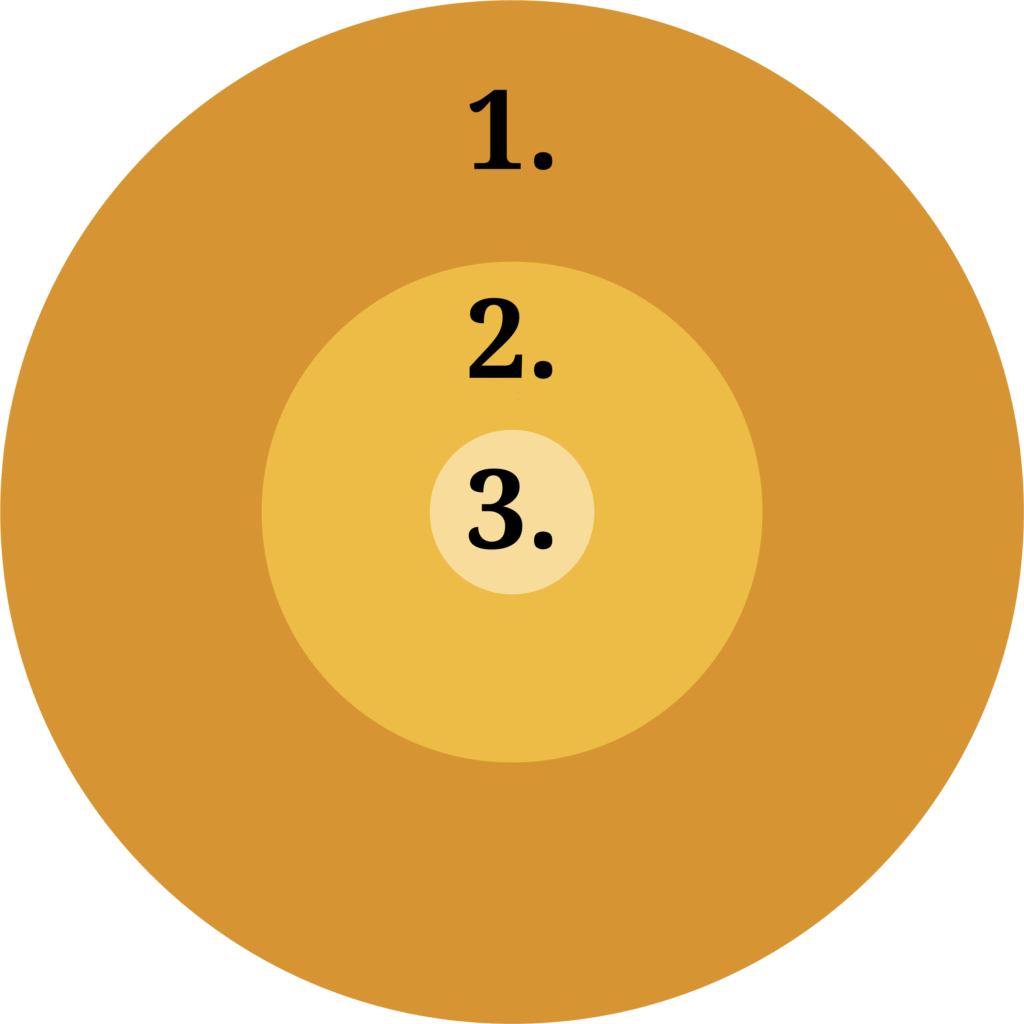
Certain organizations “anchor” an area given their long-standing presence and important contribution to local and regional economies.
Anchor institutions often catalyze or enable the growth of an innovation district in a city or region.
National or Federal governments. Known to introduce the concept of innovation districts to political and economic leaders. Some have played both a champion and convening role, by financing research and planning efforts to help leverage cities with strong universities and medical institutions. In a few cases, national governments passed resolutions to partially finance new projects and programs.
State governments. They have also introduced and championed the economic model for their respective states. In some cases, they developed competitions to spur cities and their institutions to devise a district that builds on their assets. In other cases, they have directly financed catalytic infrastructure, financing for early stage companies, and critical planning activities. Lastly, they have devised supportive policies to advance innovative sectors and place-based development.
City governments or municipalities. Have been known to support new and existing district efforts. Their support includes important changes in zoning, financing new infrastructure, enabling smart tax incentives, and, in some rare cases, city governments have given unique powers to district organizations to develop master plans and issue tax abatements.
How governments advance innovation districts
The role that governments play in advancing innovation districts is both diverse and significant:
Government leaders can serve as conveners, providing a platform for the development of a collective vision on the 21st-century imperative: collaborate to compete.
Drawing on their skills as leaders, government heads can be champions by offering a vision for growing a successful innovation economy.
Given on their regulatory powers, government leaders can be catalysts by devising new tools or streamlining old rules to incentivize district growth.
Related resources
article – July 30, 2024
What are innovation districts?
Innovation districts are urban hubs integrating research, startups, and public spaces to drive collaboration and growth.
New insights on how innovation districts are challenging economic and social divides
Innovation districts worldwide are increasingly focusing on inclusive growth and collaboration, aiming to bridge economic and social divides by combining research, public engagement, and place-led strategies to benefit broader communities.
Subscribe to our newsletter to download the full version of this article—and stay updated with the latest insights, events, and resources.
Download PDF
Cookie Consent
We use cookies to improve your experience on our site. By using our site, you consent to cookies.
This website uses cookies
Websites store cookies to enhance functionality and personalise your experience. You can manage your preferences, but blocking some cookies may impact site performance and services.
Essential cookies enable basic functions and are necessary for the proper function of the website.
Name
Description
Duration
Cookie Preferences
This cookie is used to store the user's cookie consent preferences.
30 days
Google reCAPTCHA helps protect websites from spam and abuse by verifying user interactions through challenges.
Name
Description
Duration
_GRECAPTCHA
Google reCAPTCHA sets a necessary cookie (_GRECAPTCHA) when executed for the purpose of providing its risk analysis.
179 days
Google Tag Manager simplifies the management of marketing tags on your website without code changes.
Name
Description
Duration
cookiePreferences
Registers cookie preferences of a user
2 years
td
Registers statistical data on users' behaviour on the website. Used for internal analytics by the website operator.
session
Statistics cookies collect information anonymously. This information helps us understand how visitors use our website.
Google Analytics is a powerful tool that tracks and analyzes website traffic for informed marketing decisions.
Contains information related to marketing campaigns of the user. These are shared with Google AdWords / Google Ads when the Google Ads and Google Analytics accounts are linked together.
90 days
__utma
ID used to identify users and sessions
2 years after last activity
__utmt
Used to monitor number of Google Analytics server requests
10 minutes
__utmb
Used to distinguish new sessions and visits. This cookie is set when the GA.js javascript library is loaded and there is no existing __utmb cookie. The cookie is updated every time data is sent to the Google Analytics server.
30 minutes after last activity
__utmc
Used only with old Urchin versions of Google Analytics and not with GA.js. Was used to distinguish between new sessions and visits at the end of a session.
End of session (browser)
__utmz
Contains information about the traffic source or campaign that directed user to the website. The cookie is set when the GA.js javascript is loaded and updated when data is sent to the Google Anaytics server
6 months after last activity
__utmv
Contains custom information set by the web developer via the _setCustomVar method in Google Analytics. This cookie is updated every time new data is sent to the Google Analytics server.
2 years after last activity
__utmx
Used to determine whether a user is included in an A / B or Multivariate test.
18 months
_ga
ID used to identify users
2 years
_gali
Used by Google Analytics to determine which links on a page are being clicked
30 seconds
_ga_
ID used to identify users
2 years
_gid
ID used to identify users for 24 hours after last activity
24 hours
_gat
Used to monitor number of Google Analytics server requests when using Google Tag Manager
1 minute
You can find more information in our Cookie Policy and .