





Advanced research universities and medical institutions
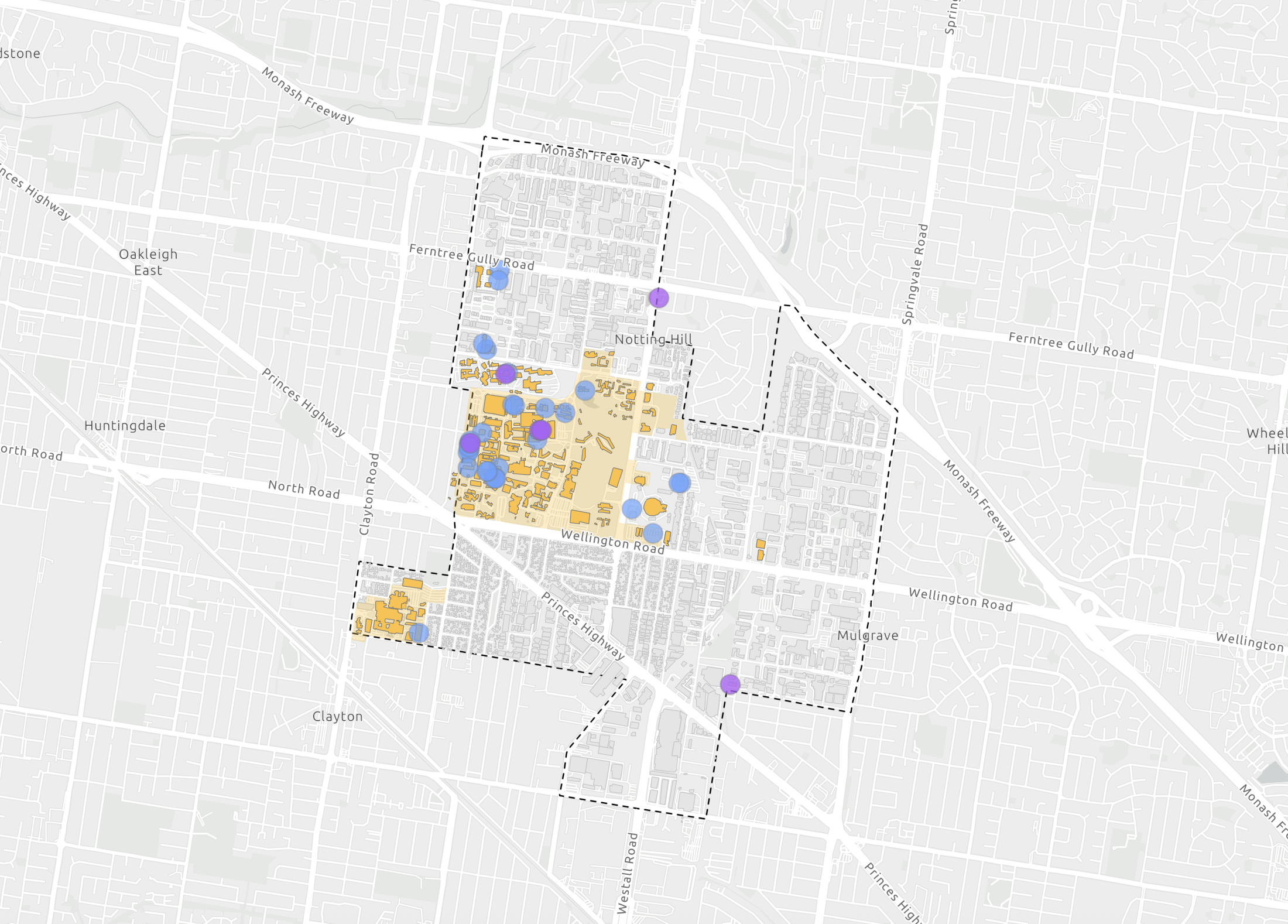
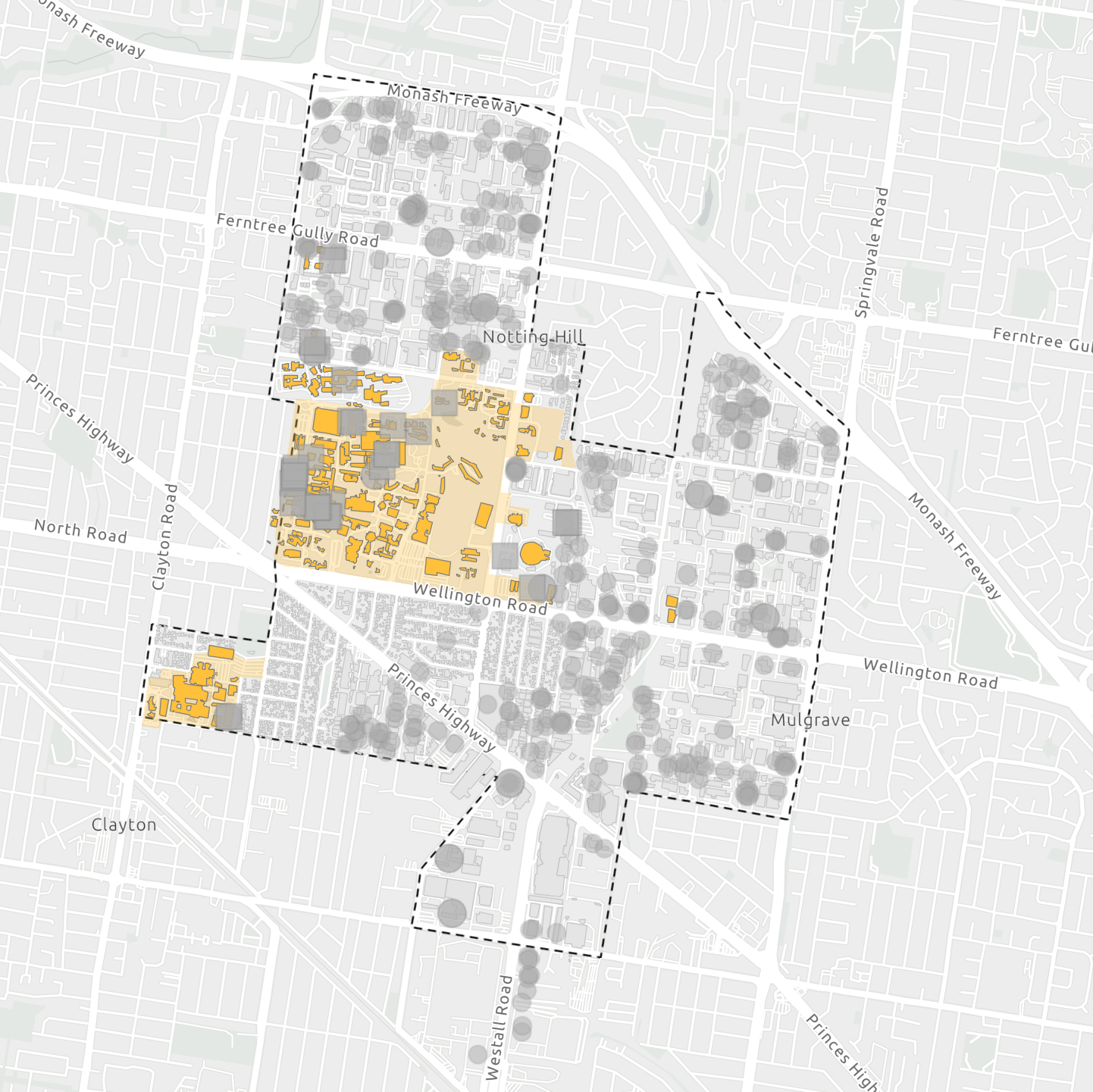
Universities, medical institutions and other research organizations are known as anchor institutions. Innovation districts emerging globally are adjacent to these research actors, a critical part of a district’s DNA
Why anchor institutions are central to innovation districts
Certain organizations “anchor” an area given their long-standing presence and important contribution to local and regional economies. Anchor institutions often catalyze or enable the growth of an innovation district in a city or region.
Anchor institutions and research
Significant research funding
Anchor institutions receive significant research funding from the government on an annual basis, including highly competitive grants. This makes them the natural research engines of their regions.
Applied research
Many anchor institutions undertake applied research, which focuses on solving problems. Applied sciences include all types of engineering, clinical medicine, and computer science disciplines, and disciplines that deal with business, law, or public policy.
Translational research
Specific institutions carry out translational research, which aims to develop a practical application of a discovery into a new technology—a product or service or something of deemed value. This research can have monetary value. Given this, institutions protect their intellectual property and execute agreements such as licensing and partnership contracts to transfer knowledge to companies.
Research spinoffs
Anchor organizations are known to create spinoffs from institution research. While institution policies define rules on how this is undertaken, spinoffs are a powerful way that institutions help commercialize the research that has taken place.
Collaborative innovation
Anchor institutions often connect and share knowledge with private firms. Companies make conscious decisions to locate near research institutions to strengthen how they obtain—formally and informally—new insights to drive products and services to market.
Talent development
Anchor institutions both develop and cultivate high quality talent. With countries, regions, cities, and companies of all sizes racing to attract the best talent, anchor institutions become invaluable to cities and regions—and also to innovation districts.
Related resources
article – July 30, 2024
What are innovation districts?
Innovation districts are urban hubs integrating research, startups, and public spaces to drive collaboration and growth.
Tearing down real walls: A place-based approach to university-industry collaboration
A place-based approach to innovation demands that universities and industries think differently about the physical landscape. Genuinely great places are about more than aesthetics; they create a community that values active, iterative learning, risk sharing, and collaborating to compete.
Australia’s pathway to innovative growth lies with its universities
Australia’s future as an innovation leader hinges on transforming its research-intensive universities into hyper-connected, collaborative hubs that drive market-led growth.
Subscribe to our newsletter to download the full version of this article—and stay updated with the latest insights, events, and resources.
Download PDF
Cookie Consent
We use cookies to improve your experience on our site. By using our site, you consent to cookies.
This website uses cookies
Websites store cookies to enhance functionality and personalise your experience. You can manage your preferences, but blocking some cookies may impact site performance and services.
Essential cookies enable basic functions and are necessary for the proper function of the website.
Name
Description
Duration
Cookie Preferences
This cookie is used to store the user's cookie consent preferences.
30 days
Google reCAPTCHA helps protect websites from spam and abuse by verifying user interactions through challenges.
Name
Description
Duration
_GRECAPTCHA
Google reCAPTCHA sets a necessary cookie (_GRECAPTCHA) when executed for the purpose of providing its risk analysis.
179 days
Google Tag Manager simplifies the management of marketing tags on your website without code changes.
Name
Description
Duration
cookiePreferences
Registers cookie preferences of a user
2 years
td
Registers statistical data on users' behaviour on the website. Used for internal analytics by the website operator.
session
Statistics cookies collect information anonymously. This information helps us understand how visitors use our website.
Google Analytics is a powerful tool that tracks and analyzes website traffic for informed marketing decisions.
Contains information related to marketing campaigns of the user. These are shared with Google AdWords / Google Ads when the Google Ads and Google Analytics accounts are linked together.
90 days
__utma
ID used to identify users and sessions
2 years after last activity
__utmt
Used to monitor number of Google Analytics server requests
10 minutes
__utmb
Used to distinguish new sessions and visits. This cookie is set when the GA.js javascript library is loaded and there is no existing __utmb cookie. The cookie is updated every time data is sent to the Google Analytics server.
30 minutes after last activity
__utmc
Used only with old Urchin versions of Google Analytics and not with GA.js. Was used to distinguish between new sessions and visits at the end of a session.
End of session (browser)
__utmz
Contains information about the traffic source or campaign that directed user to the website. The cookie is set when the GA.js javascript is loaded and updated when data is sent to the Google Anaytics server
6 months after last activity
__utmv
Contains custom information set by the web developer via the _setCustomVar method in Google Analytics. This cookie is updated every time new data is sent to the Google Analytics server.
2 years after last activity
__utmx
Used to determine whether a user is included in an A / B or Multivariate test.
18 months
_ga
ID used to identify users
2 years
_gali
Used by Google Analytics to determine which links on a page are being clicked
30 seconds
_ga_
ID used to identify users
2 years
_gid
ID used to identify users for 24 hours after last activity
24 hours
_gat
Used to monitor number of Google Analytics server requests when using Google Tag Manager
1 minute
You can find more information in our Cookie Policy and .