



One year after GIID’s inaugural Global Summit, its core lessons continue to travel across countries, institutions, and practice communities. In Japan, those conversations have sparked new reflections on what innovation districts can offer as part of a broader competitiveness agenda.
A recent article by Benika Morokuma of Nikken Sekkei Research Institute captures this shift. Written for a Japanese audience, the piece reflects on the Summit as a window into how the global innovation district field is evolving and what those lessons may mean for Japan.
Background
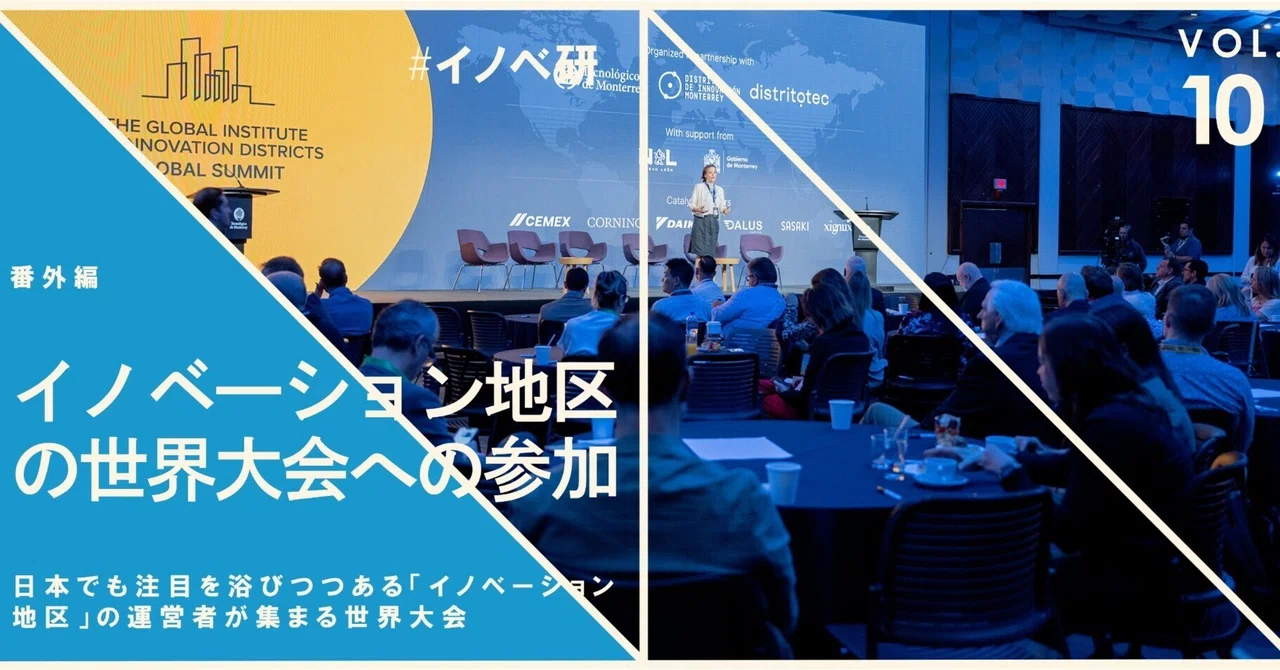
In April 2025, GIID convened its inaugural Global Summit at the Monterrey Innovation District in Mexico. It was the first large-scale gathering purpose-built for the innovation district field. Over three days, more than 330 leaders from 48 innovation districts, 19 countries, and 5 global regions came together to exchange knowledge, forge connections, and advance the practice of building and managing districts as engines of urban transformation.
A year later, those conversations are still resonating.
Morokuma’s article uses the Summit as a lens for assessing the current state of innovation districts globally and their relevance for Japan.
Her observations arrive at an important moment. As GIID President Julie Wagner and Senior Manager Laura Biancuzzo discussed at Smart City Institute-Japan (SCI-Japan)’s special forum late last year, Japan has world-class talent, strong R&D investment, and leading institutions. Yet the country continues to face challenges in translating these assets into more integrated and productive innovation ecosystems. Fragmentation across geography, institutions, and sectors, remains a persistent barrier. Against this backdrop, Morokuma’s reflections point to several implications for how Japan might evolve its approach, while also confirming several of the trends GIID has been tracking across the global field.
Key takeaways from the Summit
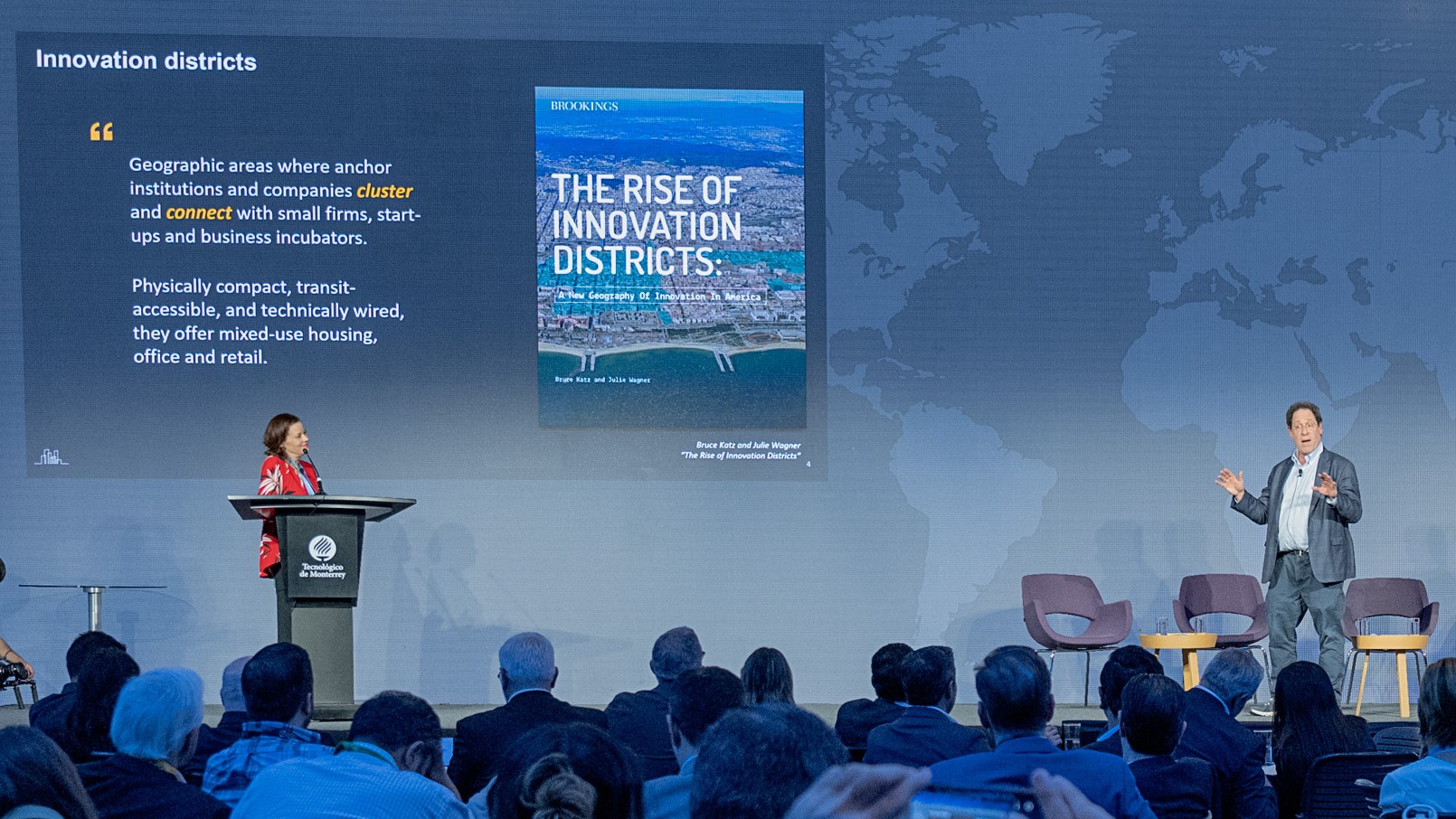
First, innovation districts are anchored in institutions.
Drawing on conversations during the Summit, Morokuma observed that district leadership globally is deeply rooted in universities, research institutions, and hospitals – the places where knowledge is generated and applied. This reinforces a critical point: innovation districts are not primarily property-led developments, but ecosystems built around knowledge-producing anchors.
For Japan, this distinction matters. The opportunity is not only to build new innovation spaces, but to better connect the institutions, capabilities, and actors that already exist.
Second, governance and operations are now at the center of the field.
Morokuma notes that some of the most engaged discussions at the Summit focused on how districts are run.
How do district attract and retain talent? How do they secure sustainable funding? How do they demonstrate long-term value? How do they coordinate across institutions with different incentives and priorities?
These questions are increasingly defining the frontier of practice, particularly as districts mature. As innovation districts mature, success depends on whether strong assets are actively organized toward shared outcomes.
Third, public engagement is becoming more urgent.
Morokuma also highlights examples such as the Science Gallery at the Monterrey Innovation District, where art, design, and technology are used to make research more visible and accessible. This points to a broader challenge: ensuring that innovation districts are not only productive, but also legible and meaningful to the communities they are part of.
Taken together, Morokuma’s observations reinforce a wider global shift: the field is moving from building innovation districts as places to managing them as complex, evolving systems.


The value of being in the room
Beyond these structural insights, Morokuma’s account underscores something less tangible, but equally important: the value of direct exchange.
As she writes, “the opportunity to get to know innovation districts organizers from all over the world, including at award ceremonies and during daily lunch and tea breaks, and to ask them questions directly about things I was curious about” was one of the most meaningful aspects of the Summit.
This kind of informal, practitioner-to-practitioner learning is difficult to replicate. Yet it plays a critical role in advancing the field, particularly in countries and regions where innovation districts are still emerging as a recognized model.
The Summit created space for leaders to compare challenges, test assumptions, and see their own work in a global context. Morokuma’s article shows how those exchanges continue to generate insight long after the event itself.

What this means for Japan
Morokuma’s reflections point to a broader implication: for Japan, as for many countries, the challenge is not a lack of assets, but how those assets are connected, coordinated, and activated.
The Summit made visible a set of practices, around governance, institutional alignment, and public engagement that are increasingly central to successful districts globally. For Japan, these insights offer a useful reference point as it looks to move from pockets of excellence toward more integrated innovation systems.
